A pedicure is a maintenance service with a set sequence, not a mystery ritual in a spa chair. If you have never booked one in Locust, or you go once a summer and forget what is normal, this guide from Truly Nails walks through what happens, how long each part takes, and how often feet actually need it. The short version: soak, nails, skin, moisturize, polish, in that order, with the details below.
The sequence, step by step
- Soak. Feet sit in warm water for several minutes. The soak softens nails and callus so everything after it can be done gently instead of by force.
- Nails off first. Old polish is removed while feet soak or right after, so the bare nail can be inspected before new color hides it again.
- Trim and shape. Toenails are cut straight across and filed smooth. Straight edges are not a style choice; they are how ingrowns are prevented.
- Cuticle care. Cuticles are pushed back and tidied, the same gentle approach used on fingers, never deep cutting.
- Callus and exfoliation. Heels and the balls of the feet are smoothed with a file or pumice, and a scrub clears dry skin. Heavy callus is reduced gradually, not stripped in one visit.
- Moisturize and massage. Lotion worked into feet and lower legs restores what soaking and scrubbing removed, and helps circulation feel less heavy after a day standing.
- Polish or finish bare. Base, two color coats, and topcoat, or a clean natural finish if you prefer. Toes are separated while polish sets so the work survives the trip home.
How often to go
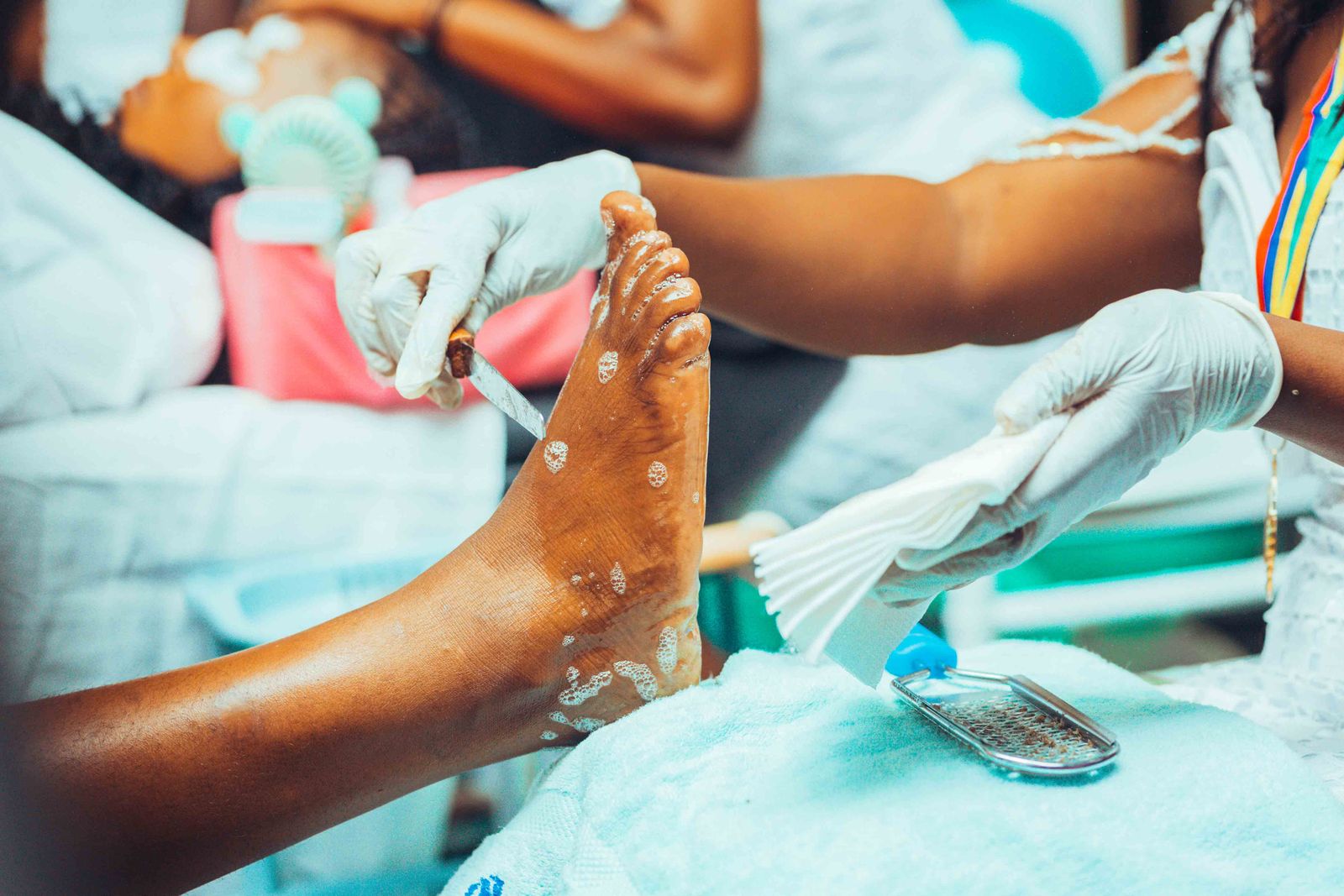
For most adults, every four to six weeks keeps toenails at a safe length, callus managed, and polish fresh. Sandal season in the Piedmont pushes toward the shorter end of that range, because feet are visible and summer growth, pool decks, and yard work are harder on them. Winter allows the longer end, as long as trimming does not lapse entirely under boots; six to eight weeks is a workable winter rhythm for many people. Go more often if callus builds fast, if you are on your feet in work boots all day, or if your toenails are thick and hard to trim safely at home. Go less often only if your home care is genuinely covering trimming and callus between visits.
What you can handle at home
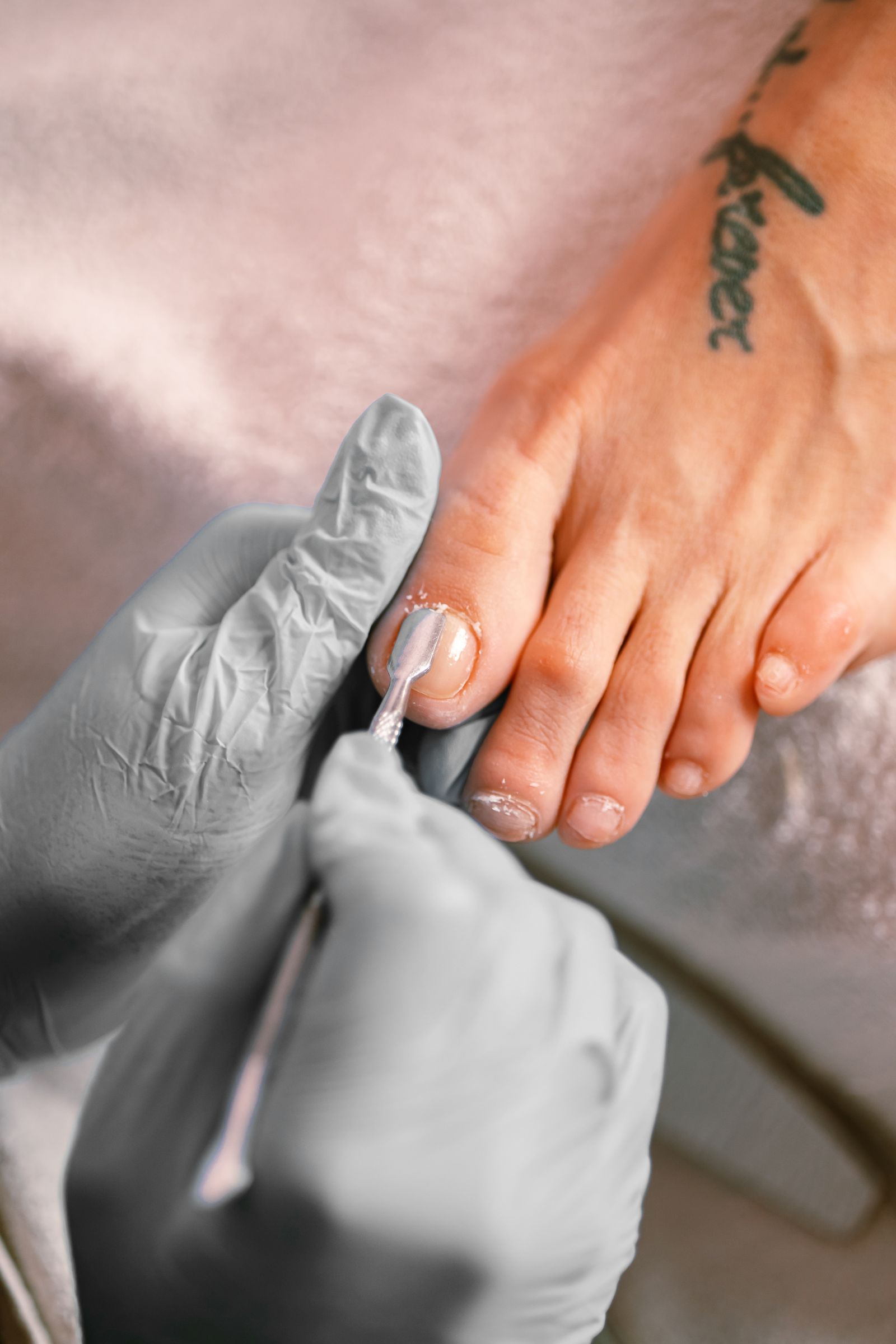
Between appointments, three habits carry the service: trim straight across when nails approach the tip of the toe, moisturize after showers, and use a pumice on wet heels once or twice a week instead of saving callus for a monthly battle. The professional line is anything sharp, deep, or medical. Blade-style callus cutting, digging at an ingrown corner, and treating a red or swollen toe all sit on the far side of it. A pedicure at Truly Nails is for healthy feet kept healthy. Pain, drainage, or spreading discoloration belongs to a podiatrist, and a good technician will tell you so rather than polish over it.
Before your first appointment
A few small preparations make a first pedicure smoother. Avoid shaving your legs the day of the visit, since scrub and lotion can sting freshly shaved skin. Skip home callus cutting entirely in the week before; let the technician see the real callus pattern. Wear or bring open shoes if you plan on polish, and mention any sore spots, thick nails, diabetes, or circulation problems when you sit down, because those details change how feet should be handled and occasionally mean a doctor comes first.
One last expectation for first-timers: ticklish is normal, sore is not. Speak up about water temperature, pressure, or a tender spot. The chair is adjustable, the service is routine, and the best pedicure in Locust is the one you do not have to brace through. Arrive with a few minutes to spare, let your feet actually soak instead of rushing the first step, and the rest of the sequence works the way it is supposed to, in order and without force, every single time you book it, season after season.
Common questions
How long does a basic pedicure take?
Most basic pedicures run about half an hour to forty-five minutes. Spa versions with masks and longer massage take more time.
How often should I book a pedicure?
Every four to six weeks suits most people, stretching to six to eight in winter. Fast callus growth or work boots argue for the shorter interval.
Should a pedicure hurt?
No. Pressure and a pumice can feel firm, but pain, especially around a toenail corner, is a signal to stop and have the spot looked at properly.
Photos in this guide are representative stock images.
← All guides from Truly Nails← Back to Truly Nails