Put the nail shapes side by side and the choice gets easier, because most of the differences are practical, not aesthetic. Corners break. Points snap. Curves last. At Truly Nails in Locust, the conversation usually starts with a photo and ends with your job, your hobbies, and how often you want to sit in the chair. This comparison is that conversation in a table.
| Shape | Profile | Strength notes | Upkeep | Best for |
|---|---|---|---|---|
| Round | Short, follows the fingertip | Strongest; almost no free edge to catch | Lowest | Hard-use hands, beginners, short nails |
| Oval | Rounded tip, gently tapered sides | Strong; no corners to snag | Low | Most hands; makes short fingers look longer |
| Squoval | Flat tip, softened corners | Good; corners eased so they chip less | Low to medium | Fans of the square look with a practical streak |
| Square | Flat tip, sharp straight corners | Weakest corners; first to chip and catch | Medium | Wide nail beds, short to medium lengths, careful hands |
| Almond | Longer, tapered to a soft point | Moderate; needs length and usually product support | Medium to high | Longer nails, formal looks, gentler daily use |
| Coffin | Long, narrow, flat tip | Moderate with acrylic or dip; fragile in natural nail | High | Statement length with regular fills |
| Stiletto | Long, pointed tip | Weakest tip; force concentrates at the point | High | Occasional wear and photo days, not tool use |
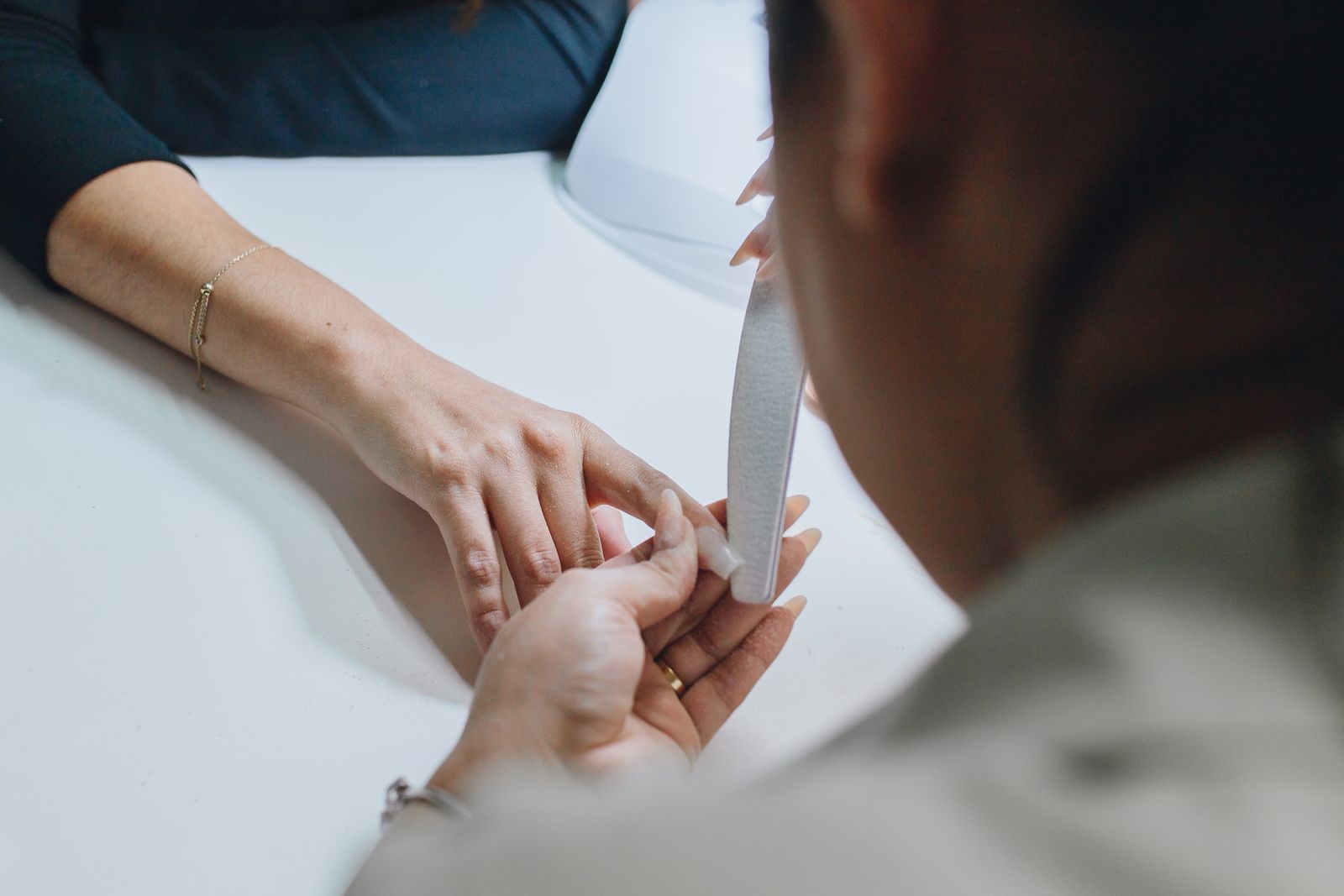
Reading the table like a technician
Two columns decide most choices: strength notes and upkeep. Every step up in drama, from round toward stiletto, trades durability for silhouette and adds appointments. Gel and shellac shift the math slightly, dip and acrylic shift it more, but products do not repeal geometry. A square corner built in acrylic is still a corner, and it will still find the edge of a car door in a Locust parking lot.
Hand shape matters second. Short nail beds gain the most from oval and almond, which draw the eye along the finger. Wide beds carry square and squoval without looking crowded. Very curved natural nails often fight a true square shape and sit happier in squoval, where the softened corners match the nail's own arc.
Lifestyle is the tiebreaker
Typing, instruments, healthcare, childcare, warehouse and garden work all push the sensible choice down the table toward round, oval, and squoval, at shorter lengths. Desk work with care, and a willingness to book fills, opens the longer shapes. Season plays a part too: winter's dry Piedmont air makes natural nails more brittle, so a shape that survived summer may need rounding or shortening by January. Choose for the life the nails will actually live, and a set from Truly Nails will still look deliberate at week three instead of repaired at week one.
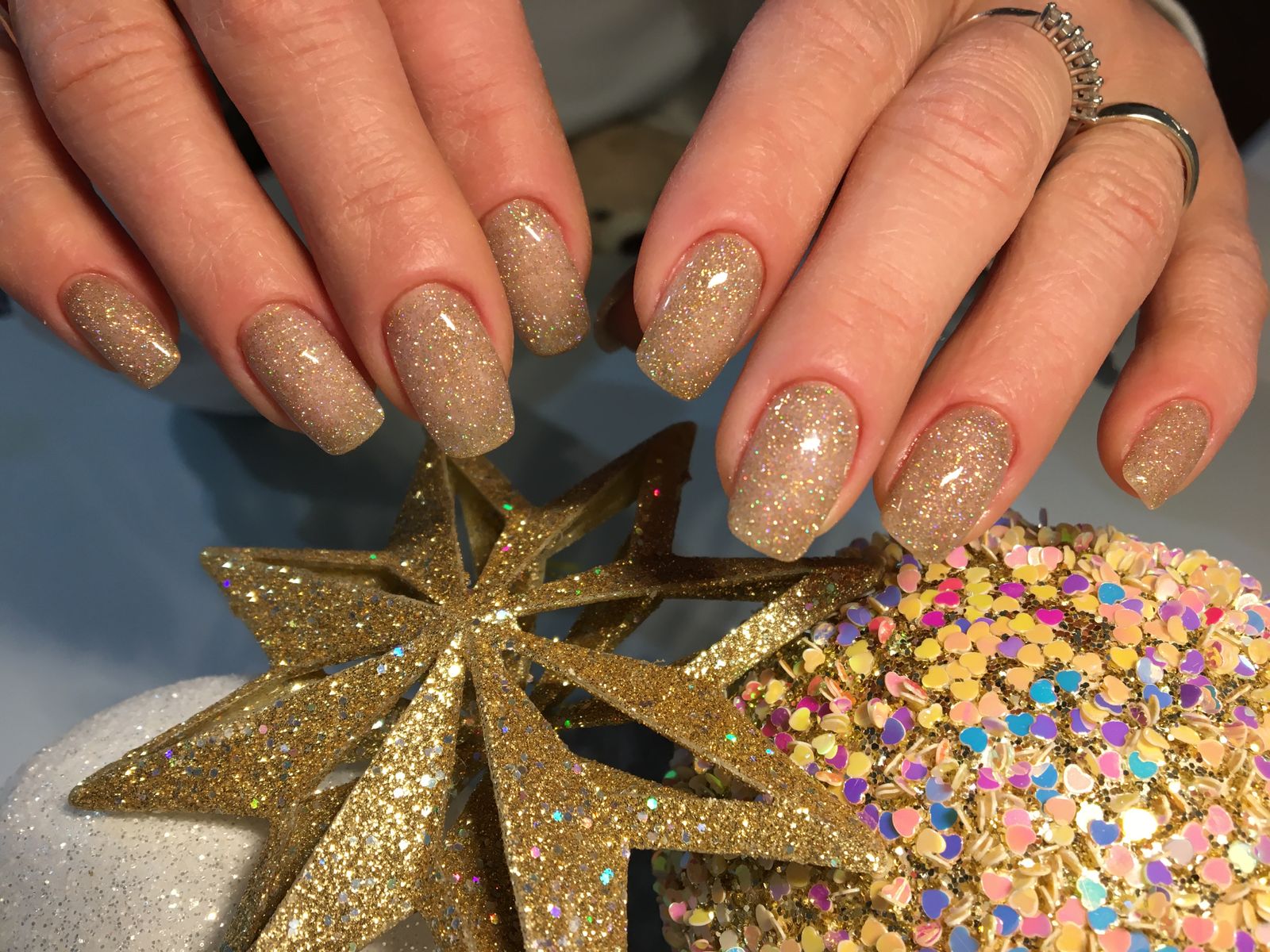
What the photos never show
Shape photos are taken on day one, at full length, under good light, on hands that have not yet typed a report, opened a package, or dug in a garden. Judge a shape instead by its third week: how the corners look after real use, how much length has been filed back to keep it tidy, and how many repairs sit underneath the polish. Clients in Locust who choose with week three in mind rarely regret the choice. Clients who choose for the photograph sometimes spend the whole cycle protecting the set from their own lives, which is maintenance working backwards.
There is also a middle path the table makes easy to miss: mixed shapes. Many people run oval on the working hand and almond on the other, or squoval at work length with one longer accent nail. A good technician treats the table as a starting grid, not a set of sealed boxes, and adjusts per hand and per finger when the evidence says to.
A note on toes
Toenails play by stricter rules. Length stays short and shapes stay simple, round following the toe or straight across with filed corners, because shoes punish anything longer or sharper. Save almond and coffin experiments for fingers. A pedicure shape that looks fine barefoot in July can become an ingrown problem inside a boot in November, and the table above was written for the nails people actually see.
If you are torn between two shapes, pick the stronger one first and live with it for a full cycle. Moving up in length and drama is easy at the next appointment. Recovering from a set that broke twice in the first week is how people conclude, wrongly, that enhancements are not for them.
Common questions
Which shape breaks least?
Round and oval break least, because there are no corners or points to catch. Short versions of both are the hard-wearing end of the table.
Does acrylic make a weak shape strong?
It helps, but geometry still rules. A long stiletto or sharp square corner stays vulnerable even when built, it just fails less often.
What shape suits short nail beds?
Oval and almond, which lengthen the look of the finger. Even at modest length, the tapered sides do most of that work.
Photos in this guide are representative stock images.
← All guides from Truly Nails← Back to Truly Nails